
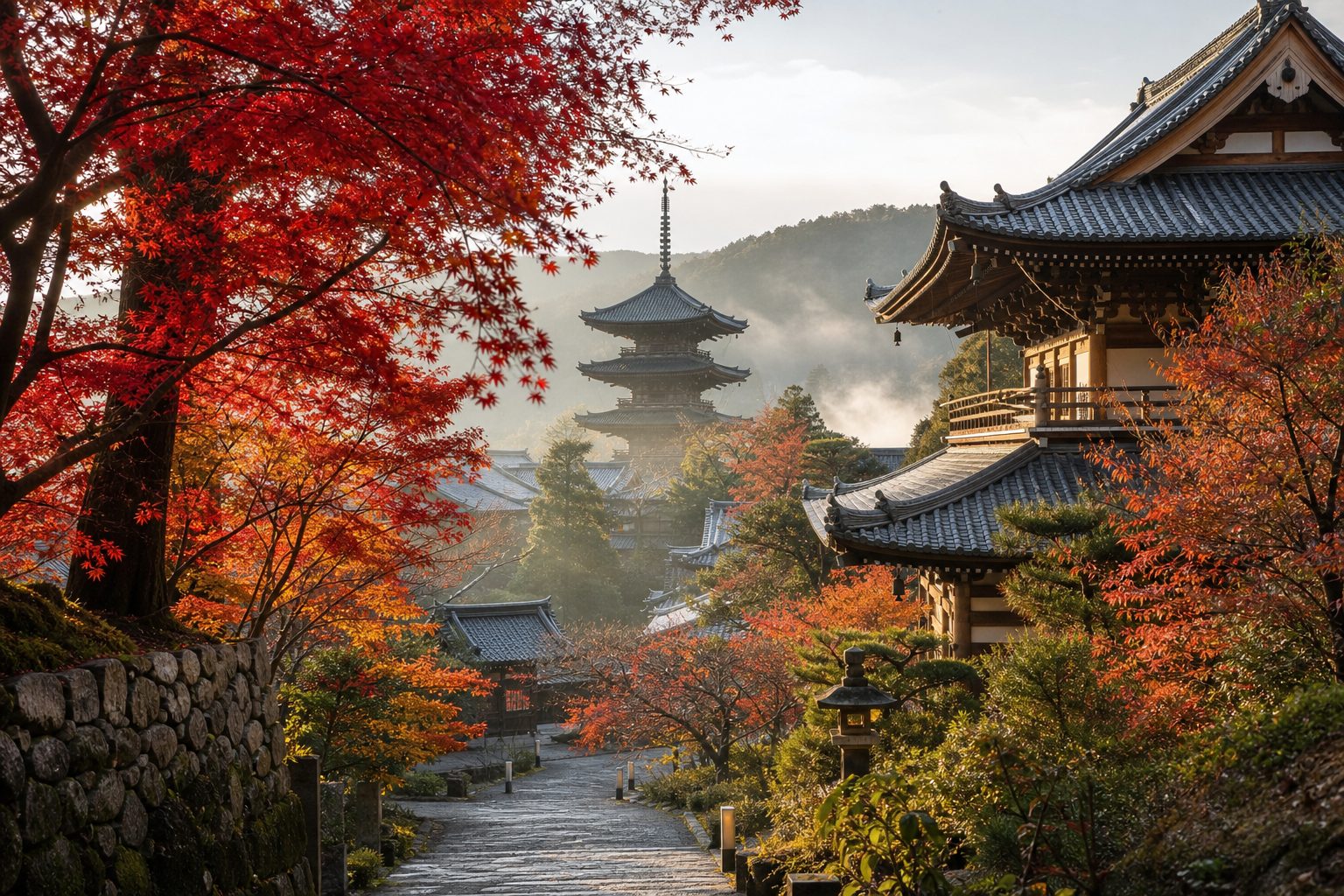
For years I told myself I wasn't "ready" for Japan. Too far, too different, too many stories about getting hopelessly confused on the subway. The truth, which I can admit now, is that I was a little afraid — afraid of a place where I couldn't read a single sign, couldn't eavesdrop, couldn't blag my way through on bad school French. So of course it became the trip that taught me the most. Isn't that always how it goes?
I went in November, on purpose. I'd missed the famous cherry blossoms by half a year and decided, almost out of spite, to chase the other season everyone whispers about: kōyō, the autumn leaves. I will never stop being grateful that I did. Autumn in Japan is, for my money, even lovelier than spring — and a fraction less frantic.
Kyoto, and the colour I wasn't ready for
Nothing prepares you for the maples. I'd seen the photographs, the impossible reds, and assumed they were saturated to within an inch of their lives. They are not. The first temple garden I walked into actually stopped me mid-step — a whole hillside of crimson and burnt orange and gold, so vivid it looked lit from inside. I stood there grinning like a fool. An elderly couple noticed and grinned back. We didn't share a word of language and it didn't matter at all.
That became the theme of the trip: how little language I actually needed, and how much kindness filled the gap. The fear I'd built up — of being adrift in an unreadable place — dissolved within a day. Yes, I got the train wrong once. A station attendant walked me, physically walked me, to the right platform. People returned my clumsy bows. A shopkeeper chased me down the street because I'd left my change.
The rituals I didn't expect to love
What surprised me most wasn't the big sights. It was the small, almost ceremonial care woven into ordinary things. The way a convenience-store clerk handed back my card with two hands and a nod. The hush of a morning temple before the crowds. The precise, unhurried art of a bowl of ramen eaten at a six-seat counter while the chef worked in total concentration. I'd come for temples and gardens; I fell for the texture of daily life.
I started slowing down to match it. I'd get up early — partly jet lag, partly to have the gardens to myself for an hour — and just sit. I kept a little ritual of green tea and my journal before the day began. By the end of the week I'd stopped rushing entirely, which for me is no small thing.
A day trip that became the whole point
Midweek I took a train out of the city with only a vague plan, found a quieter temple complex tucked into the hills, and spent an entire afternoon walking its stone paths under the maples. I met almost no other tourists. I ate a simple lunch I couldn't name and loved. I sat by a pond until the light went amber. It was the day I'd planned the least and it became the one I think about most — which, if you've read my Portugal entry, you'll know is becoming something of a pattern in my life.
My honest Japan-in-autumn notes
- November is the sweet spot in Kyoto for the maples — but it shifts yearly, so check recent foliage reports before you lock dates.
- Mornings are magic. The famous gardens are serene at opening and mobbed by mid-morning. Set an alarm.
- You need less language than you fear. A few polite words, a translation app, and a willingness to point will carry you everywhere.
- Get a transit card on arrival and stop thinking about fares. It removes the one thing I'd been anxious about entirely.
- Leave a whole day unplanned for a quieter temple town outside the city. Mine was the highlight.
What I brought home
I came back from Japan a calmer traveler and, honestly, a calmer person for a while. The thing I kept wasn't a souvenir — it was the discovery that the trip I'd been most afraid of turned out to be the gentlest, most welcoming place I'd ever been. I'd let a fear of the unfamiliar keep me away for years. Now, when something feels too far or too different, I take it as a sign I should probably go. The maples taught me that. So did the man who chased me down the street to return my change.
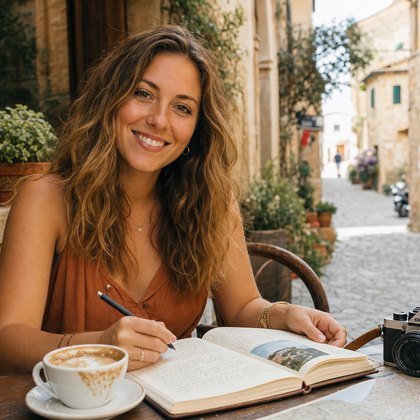
Writer and slow traveler based in Columbus, Ohio. I document the road one honest entry at a time — no sponsors, no affiliate links, just how it actually went.
More from the diary
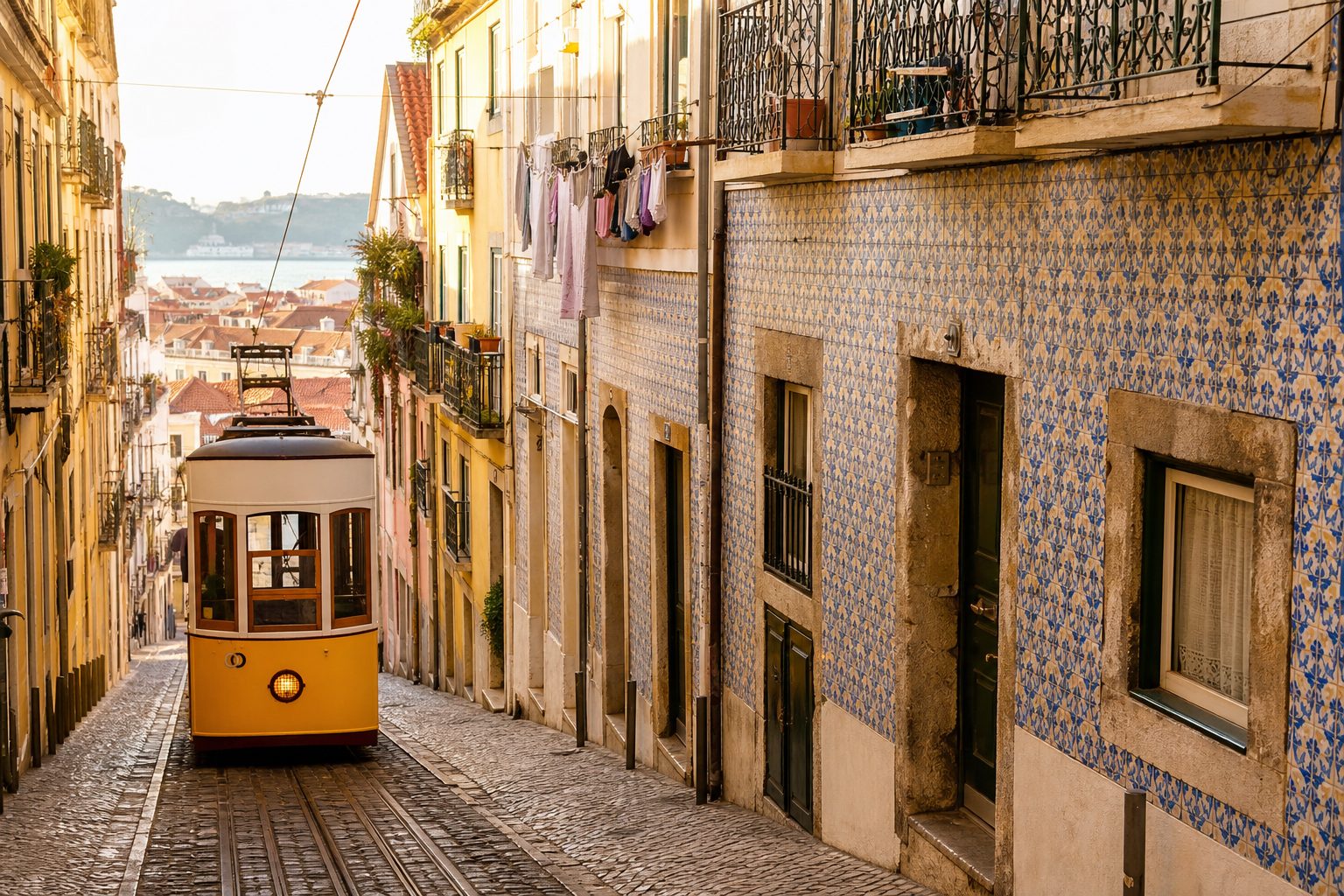 Portugal
A week in Portugal that rearranged how I travel
The case for planning half as much.
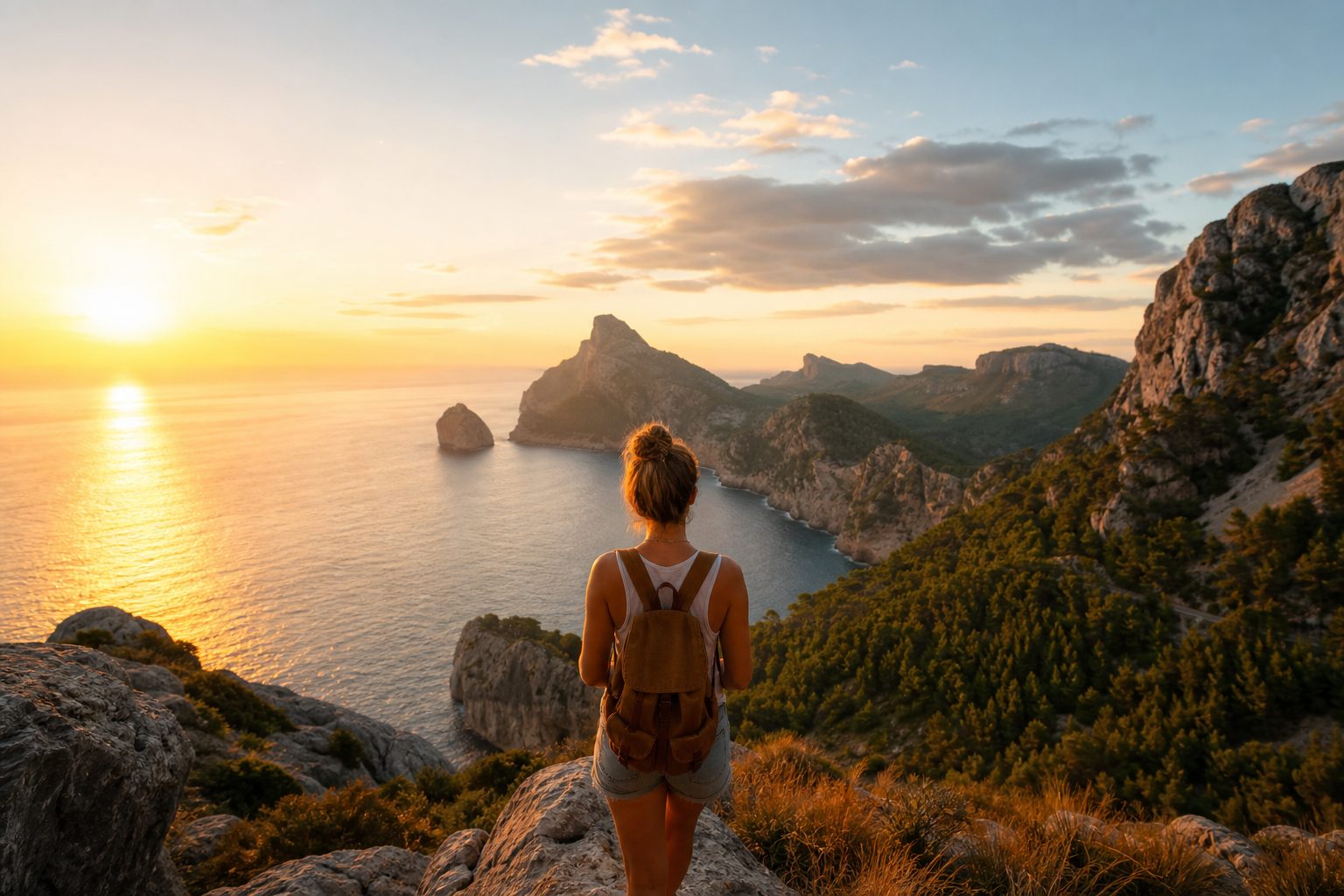 Notebook
Solo travel as a woman: what I actually do
How I go alone and sleep soundly.